
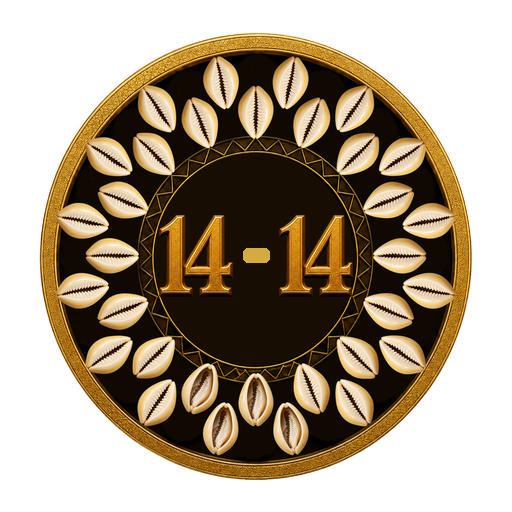
Merinla tonti Merinla
Merinla family · a sign of the diloggún
Description
It is a fighting, talkative, and highly creative person, but also dominant, forceful, and at times prey to anxiety, fear, and anguish.
It is best for them to act with logic, prudence, and respect for the Orishas and the dead, fulfilling their ebboses and avoiding secrets, whims, and excesses.
Born in this sign
- In this sign melli:
- Gonorrhea is born, the eyebrows, the eyelashes, the eyelids, the oxidation of iron, the buzzing, the hissing, the prohibition that establishes the resting of divination after six in the evening is born, it is born that man uses woman to satisfy himself sexually and then rejects her, gratitude was born, beheading is born, the analysis of facts and things is born, logic, the spirit of Ozaín odesegue (sacred fire), the color brown is born, whirlwinds, jealousy in animals, antigens in the blood, leukocytes, ferocious and carnivorous animals.
Proverbs
- Tying loose ends makes a rope.
Stories and patakíes
At birth xla suffered hunger
At his birth xla suffered hunger.
And he could not eat the animals.
One day, he contemplated his life and said: the others have everything they need, and I have nothing.
What do I have to do with Oduduwa?: Take ten cauris, and go find awo: “since my birth, I have nothing to eat”.
Could you do something for me?
Awo took his kpoli, found iwori meji, and said get some iron hooks (they could be fishhooks), two hens, a he-goat, ten cauris, and sacrifice.
Xla refused: how?
I have nothing to eat, and what he does is ask me for something?
If I had a he-goat, I wouldn’t have come to see him!
Xla went on his way, found the hooks.
On his way through the prairie he saw two he-goats, and he realized that the owner was absent.
Xla liked the two he-goats for himself, and looked to the right and to the left, and took the two animals.
And he began to sing: ire a gbodo, (may it be repeated!) I, ajanu xla.
Ire a gbobo.
There are so many animals, a gbodo!
I, xla, ire a gbodo.
And he came back with the two he-goats.
And he gave them to awo with two hens, ten cauris, and the iron hooks.
And awo took his offering, and made the sacrifice, and gave the hooks to xla.
Xla was happy with his hooks (claws).
Awo had put them on the ground, except that he put them on his fingers.
Xla went to sleep at night.
The next day, he woke up: each hook was fastened to the skin of his fingers.
And xla went quickly to the forest.
He found agbali, the antelope, his playmate, who knew nothing about the story of his claws.
He called agbali, and in the course of the game, he passed his claws across his throat.
Agbali struggled and cried: ceevo!.
What are you doing to me!.
And xla exclaimed: ka wooo-meji!
Consult woli meji!
Agbali exclaimed: ceeevo!
Ceeevo!.- And xla howled: ka woooli meji!
In this sign is that xla begins to eat.
And from this day on it is that agbali repeats in the forest: ceeevo!.Ceeevo!..
Woli meji is the sign under which xla came into the world just, he was hungry.
He went to see awo, by call for consultation.
This sign came out.
Awo prescribed a sacrifice.
He asked xla for: three roosters and three pumpkins.
This was what the sacrifice consisted of.
Xla procured all of this, and he was told not to fail to make the three different offerings (personal sacrifices).
In the morning, he went alone to the shrubs to leave the first sacrifice and if he found any animal, he was not to touch it.
When he arrived at the shrubs, xla saw a dead elephant.
He said: how?
He told me not to touch anything on my path.
But I am hungry.
Now elegbara, who was exactly in the shrubs, said you cannot touch that animal, and obey awo's orders.
Xla left the elephant and went on.
At noon he went to take his second sacrifice and saw a dead ram, and elegbara told him not to touch it either and so he did.
In the afternoon he went to deliver the third sacrifice, and found a dead antelope.
Elegbara told him: sit down and eat with joy.- He sat down and ate.
Elegbara then said: from now on, you will never be hungry again.
And, since this time, xla does not suffer hunger.
Proverb: woli meji!
Dagbe ma ño wa nu gbeto.
Woli meji!
He is not good at returning favors to other people.
This is the sign that appeared to xla and to the man.
Xla found it in the forest, and his oluwo told him to offer some iron claws in sacrifice.
He refused this.
The oluwo looked for everything necessary for his own sacrifice and did it.
One day xla was having terrible hunger.
He found an oluwo accompanied by a child.
And he said: are you my oluwo?.
Give me something to eat.
I have nothing in my stomach!
How, the oluwo exclaimed, how am I going to find meat here?
You are the hunter; I have nothing.
Xla said: there is an animal behind you.
The oluwo said: know that oluwos are there to protect people and not let anyone die.
But xla threw himself on the child and ate it.
And after this act xla sang thus:n`du bulu de!N’du buuulude!I have to eat what should not be eaten!Evil appears to be good and vice versa, beware.The thief stole from xla in the city, and the thief returned it.
Xla lived in agbodo
Xla lived in agbodo.
He was a great thief.
Always, he took the sheep from others.
The peasants gathered all together on a beautiful day and said: how do we get rid of xla?
And they decided to throw him out of the city.
Xla, once expelled, went to look for an oluwo called alitonu boko to consult awo, to know how to enter the city that had banished him.
Woli meji came out.
The oluwo asked him for a pot of palm oil and a wooden jar with palm wine (akoko).
It was necessary to put the pot and the jar at the public gate of agbodo, so that everyone would find this and have fun.
Awo added: after leaving this, hide in the bushes, and watch what happens.
A moment later, a palm wine seller came and went by singing: kuuuuuu-wi!
Shortly after, people began to come.
And each one began to buy and drink palm wine.
Suddenly, a peasant opened and exclaimed: is it yours?
What is good about this pot?
And they went to see it.
He saw the palm oil, and said: who is the fool that left this oil here without taking care of it?
Well, I will take some.
– A second peasant: I am also going to take advantage of the opportunity!
And the third and the fourth, and then everyone left the pot with no oil at all.
Xla did not appear.
Seven days later, xla went to take the complaint before the chief of the city against those who denounced him as a thief.
The Oba asked him: what were the charges?
Xla answered: that he had bought a pot with palm oil and, when crossing his town, he stopped to rest in the bushes and left the pot of oil at the public gate.
On my return there was nothing to recover.
A few days later, I learned that those who took the oil live in this town.
And the Oba asked his people and they said: that they found the pot with the oil and, since it had no owner, they drank it.
– How do you judge your act?
Asked the chief.
Then xla began to laugh and said: see well that I am not the only one who steals in the city!
Why did you allow them to banish me?
The chief concluded: xla speaks well, he must be admitted back into the city.
And xla entered the city, and xla walked like a chief.
And everyone sang behind him, as they sang on the day of banishment.
Songs.
Ku na do glibo azo na do gli, he na do gli, bo ya na do gli.
E do ago!
Laye laye!
Gbodo-gli bo do gli doe do ago!
Death is at the entrance of gbodo and disease is at the entrance of gbodo, misfortune is at the entrance of gbodo and poverty is at the entrance (of gbodo) the entrance of the city that they said: behind!
Nothing has to do!
Nothing has to do!
The fear of gbodo (= xla) grew great in the land the city of the entrance, they said: behind!
The full entry is in the app
Prayer, attributes, keys, conduct and advice, health, works and ebó, and more patakíes of this sign in Signos del Caracol.